
Selling your instrument can be a simple solution for any musician wishing to invest money in a new acquisition. It can also be a way of parting with a violin, viola, cello or double bass you no longer need. No matter what the value, condition or quality of the instrument: a musician will always be able to match it. For example, a professional may choose a special, prestigious instrument that will transcend all his talent. But it could also be that a young beginner is looking for low-cost equipment.
Estimating the value of your instrument
If you're not sure about the value of your violin, viola or cello, you may be in for a surprise. Although there's very little chance that your violin bearing the "Stradivarius" label is an original, many of the copies inspired by the famous violin-maker are very old and fetch very good prices: even in what might at first appear to be quite disastrous condition.
Online estimate
If you are thinking of selling your instrument, please send me the photos so that I can give you an idea of its value. To do so, please send me photos(of the best possible quality) by e-mail, preferably specifying :
- Trunk length: by measuring the bottom from edge to edge without the heel.
- Pitch: measure from the top of the chest(edge against neck) to the inner notches of the soundholes(bridge location).
- Neck length: from the neck stop on the body to the top nut(start of the vibrating string).
- The widths of the upper, lower and central parts of the instrument.
[blog_posts items="1″ orderby="date " ids="2508″]
Where to sell your instrument
Rather than selling off your property on online classified ads. Call on a luthier who can appreciate the true value of your instrument and pass it on directly to musicians or collectors. If you have any further questions, please don't hesitate to contact me by e-mail, telephone or even visit my workshop. You'll also find all my contact details on my contact page.
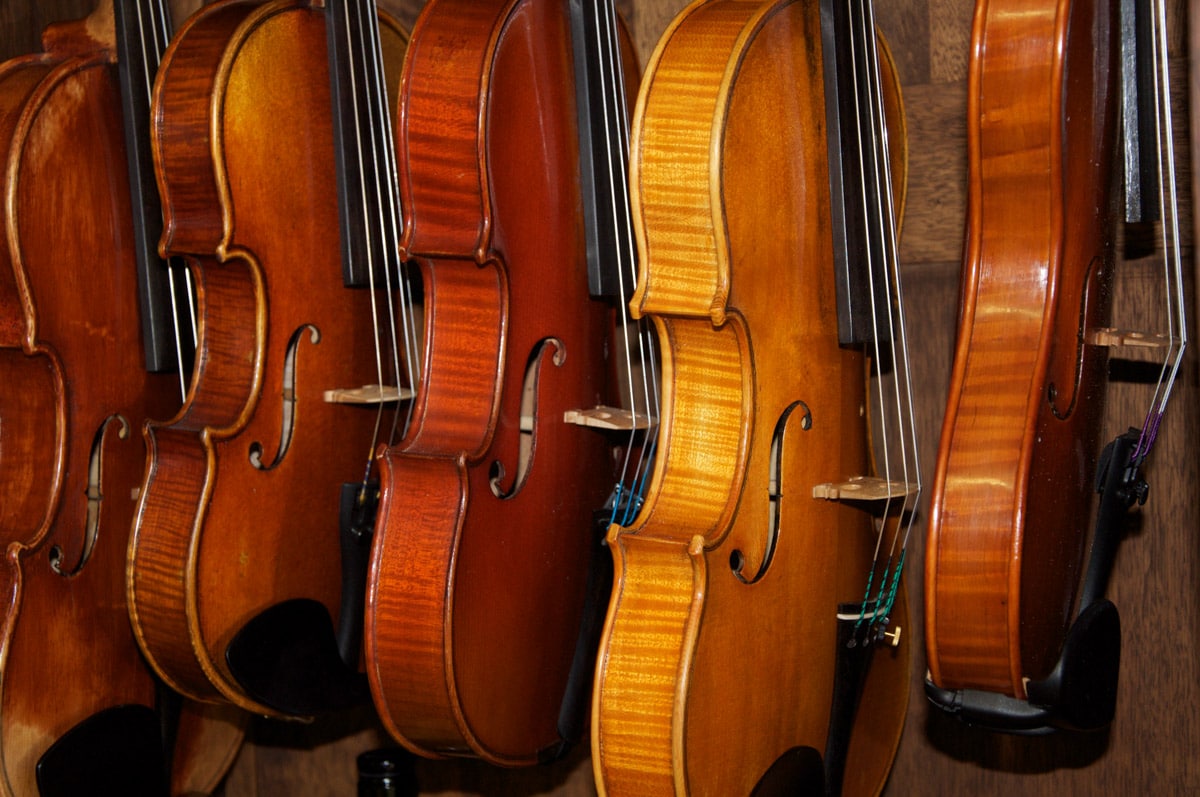
Workshop solutions for selling your instrument
Direct sales
Direct sale is a simple transaction in which I acquire the instrument directly. It represents a quick solution for disposing of an instrument, while still obtaining financial compensation.
Buying direct from my workshop offers a number of advantages:
- The possibility of selling an instrument regardless of its condition.
- Immediate cash flow for you.
If, however, you decide to opt for a direct purchase, here are a few things to bear in mind:
- The price I usually offer is half the market value of the instrument, minus any repair costs.
- Payments are made by cheque only.
- A photocopy of the seller's identity card is required, as is an entry in the workshop's police register.
Deposit and sale
The workshop offers a depot-sale service for violins, violas, cellos and double basses, as well as their bows. This is the method by which a private individual can sell his or her instrument at the best possible price, although there is no guarantee of a specific date for collection.
Choosing to bring your instrument to my workshop for sale offers you several advantages:
- The assurance of the best selling price: The expertise and guarantees of our violin making workshop ensure that your violin, viola or cello is sold at its true value. As opposed to direct purchase or sale on any other non-specialized medium(eBay, Leboncoin and other classified ads...).
- Margins between 10 and 20% , decreasing according to the value of the instrument.
- As a result, your instrument will benefit from the passage of musicians in search of the instrument of their dreams: perhaps yours.
- You'll also benefit from the workshop's insurance when you drop off your instrument.
The same quality criteria are applied to instruments for sale as to all other instruments offered in the workshop. Damaged, defective or non-playable instruments will be systematically refused. The prerequisites for dropping off your instrument at the workshop are :
- First and foremost, the instruments must meet the workshop's quality criteria, be well assembled and sound. A complete overhaul and cleaning are encouraged, however, to increase their chances of sale.
- You'll then need to sign a depot-sales contract. This is drawn up in duplicate, and specifies the sales amount and margin.
- A photocopy of your identity card is also required .
- Finally, it will be necessary to register in the workshop's police register.
Taking back your instrument
A trade-in only takes place in a very specific context: if and only if the customer wishes to purchase a higher-value instrument from the workshop. There are then two possible scenarios:
- If the instrument has been previously purchased at the workshop and on presentation of its invoice. It will be taken back at its purchase value if it has not been damaged and has been perfectly maintained. In this case, the repair costs will first be deducted from the trade-in price.(Only for old instruments. For all modern instruments, a discount will be applied according to the date of purchase.)
- If the instrument was not purchased at the workshop, it will be treated as a direct purchase.