
Above all, an instrument is defined according to two precise criteria: its value and its sound. Is it a commodity or a musical tool? In fact, it's only when you enter the realm of works of art or antiquities that it becomes interesting. That's why an authentic violin bearing a signature or dating from a certain era will always be the stuff of dreams. But where does the dream end and the nightmare begin? Here, I'll try to explain why "authenticity" is so important. I'll also explain why you need to be vigilant.
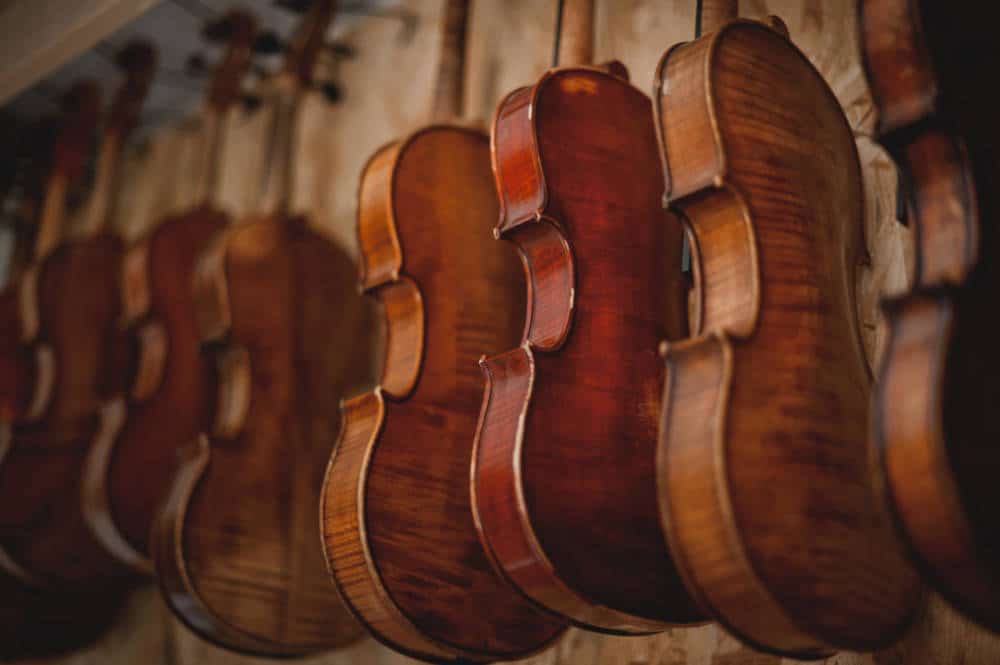
What is an authentic violin?
First of all, it's important to understand that the art and antiques market is very specific. The name affixed to an object, in this case a signature, confers great value on it. This value often exceeds the sum of the value of the components or the work carried out on it. This is why a violin with a signature and a particular origin will be worth much more than an anonymous factory-made violin. Although, in practical terms, the two are not fundamentally different: one is a work of art or an antique, the other a simple consumer product. One is a work of art or an antique, the other a mere consumer product.
What is an antique?
In fact, by law, an antique is an object that is over 100 years old and not an original work of art or collector's item. As a result, as of today, all violins, violas and cellos made before 1920 are considered as such. Thus, even the most commonplace and shoddy violins enjoy a special status today, as they have survived the test of time and bear witness to a bygone era.
The case of signed violins
Signed violins, on the other hand, are different: they are considered works of art, and whether they are the work of a master will greatly influence their price. The reasons why prices vary are supply and demand, with impressive, recognized names always being the most sought-after.
What makes the price of a violin?
[blog_posts items="1″ orderby="date " ids="6179″]
How do I know if my violin is genuine?
Above all, it's a very delicate subject to tackle. First of all, are you really prepared to accept that your violin is not authentic? After all, if its sound and playability suit you perfectly, does it really matter?
And even if the manufacturer has given you the instrument in person, it will be difficult to attest to anything. That's why it's important to understand what you or he mean by authenticity. For example, is a violin made entirely in China or Romania, then varnished, signed and assembled by a European luthier, an authentic violin?
Certification
Let me explain: first of all, you need to understand that the only thing that can attest to the authenticity of your instrument is a certificate of authenticity. Without it, your instrument's signature is worthless. And even when you present this certificate, there will always be doubts, suspicions and rivalries between experts. Take, for example, Antonio Stradivari 's much-debated Messiah . But this is perfectly normal: as soon as there's a lot of money at stake, passions run riot.
On the other hand, you should be aware that most certificates issued by "luthiers" or "connoisseurs" are worthless. So it's important to find the right person to submit your violin to. If you'd like to know more, you can also read this page: Violin expertise.
Finally, it's also important to understand that even if an insurance certificate is a kind of document that attests to the value of an instrument, it doesn't replace a real certificate that testifies to a thorough appraisal. It does not, however, replace a real certificate that testifies to a thorough appraisal.
A violin of dubious authenticity
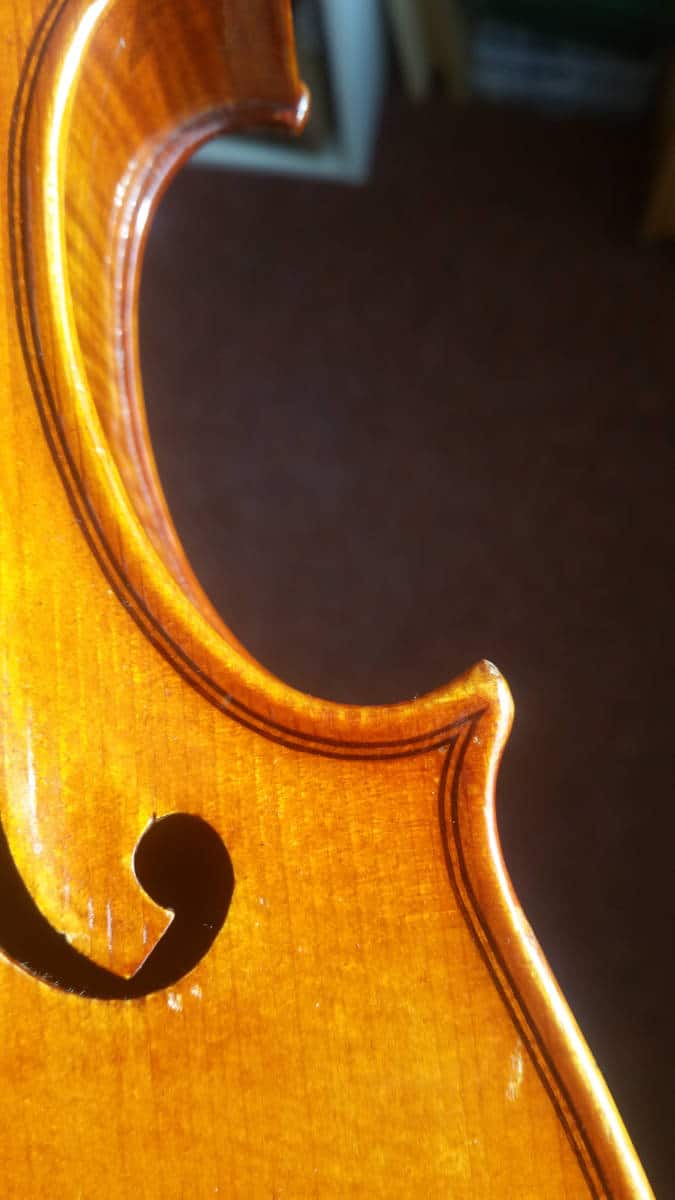
The following violin was brought into my workshop some time ago as a mid-20th century Italian violin. Of course, I only had a few adjustments to make to it, but many details jumped out at me. That's why I wanted to share it with you.
Nets
Firstly, if we look at the table and back fillets, there's a clear difference between the two. The table fillet has a black stripe that is thinner than the white stripe. As for the purfling on the back, its central band is so discreet that you can't even see it from a distance. Why would the luthier have done this?
The horrible heel repair
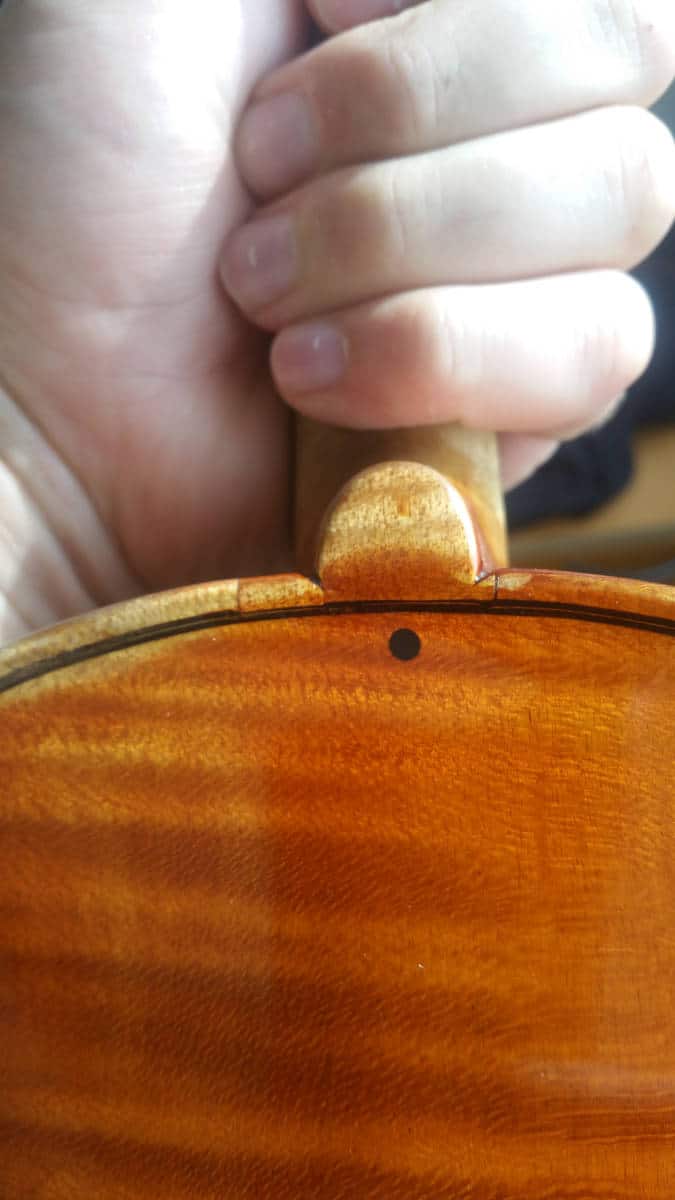
Above all, the heel is badly repaired. The fact that this repair is so visible is suspicious, and raises doubts as to whether it will hold up over time. That's why it's also important to consider the overall condition before looking at a signature or origin. This parameter does not really give any indication of authenticity, but it does have a major influence on value.
That's why, before buying an instrument, especially from a private owner, it's vital to check its condition as thoroughly as possible, and if possible to seek professional help or advice. Because in this particular case, it's possible that in six months' time the heel will give way and the neck will separate from the body under the tension of the strings. You would then be obliged to advance large repair costs.
On the other hand, if you buy from a reputable boutique, you'll have no problem with the warranty on the restorations that have been carried out. So you can rest easy.
Trunnions
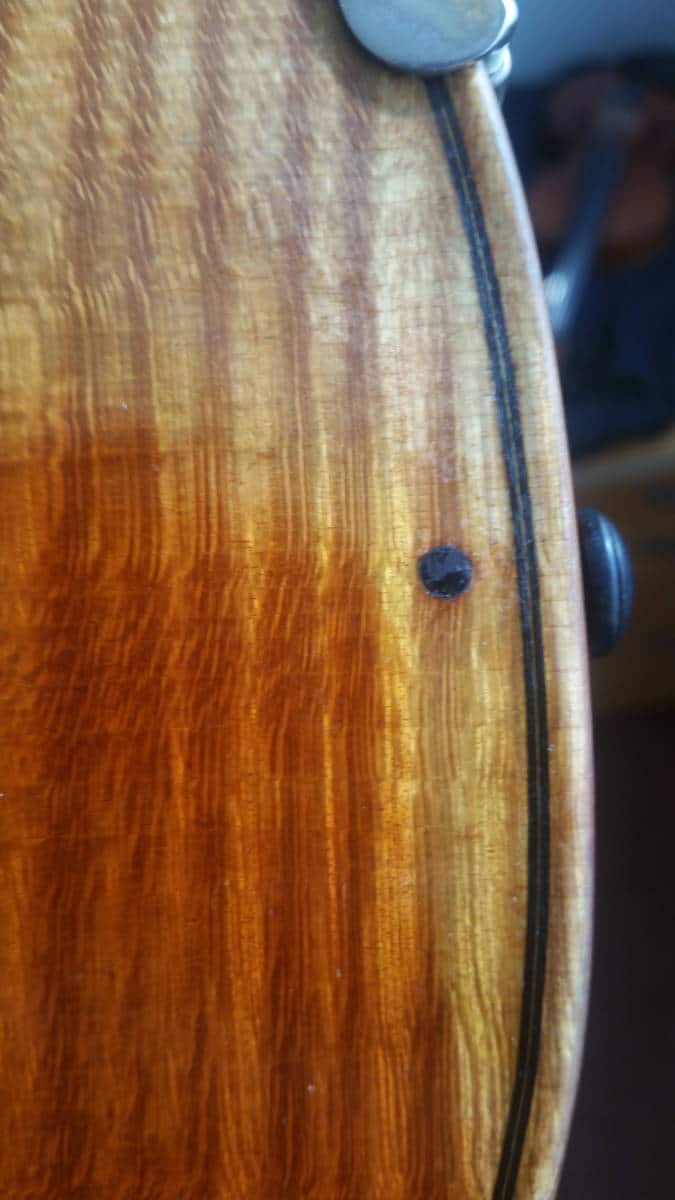
These two pieces of dark wood(possibly ebony) at the base and top of the back on this violin are of a size and shape that do not inspire confidence. It could just be a coincidence, but they're far more massive than we're used to seeing(which could indicate the work of a DIY enthusiast lacking in equipment). Finally, what's even more suspicious is that they don't surface well with violin. This could indicate that they were placed after the violin was finished.
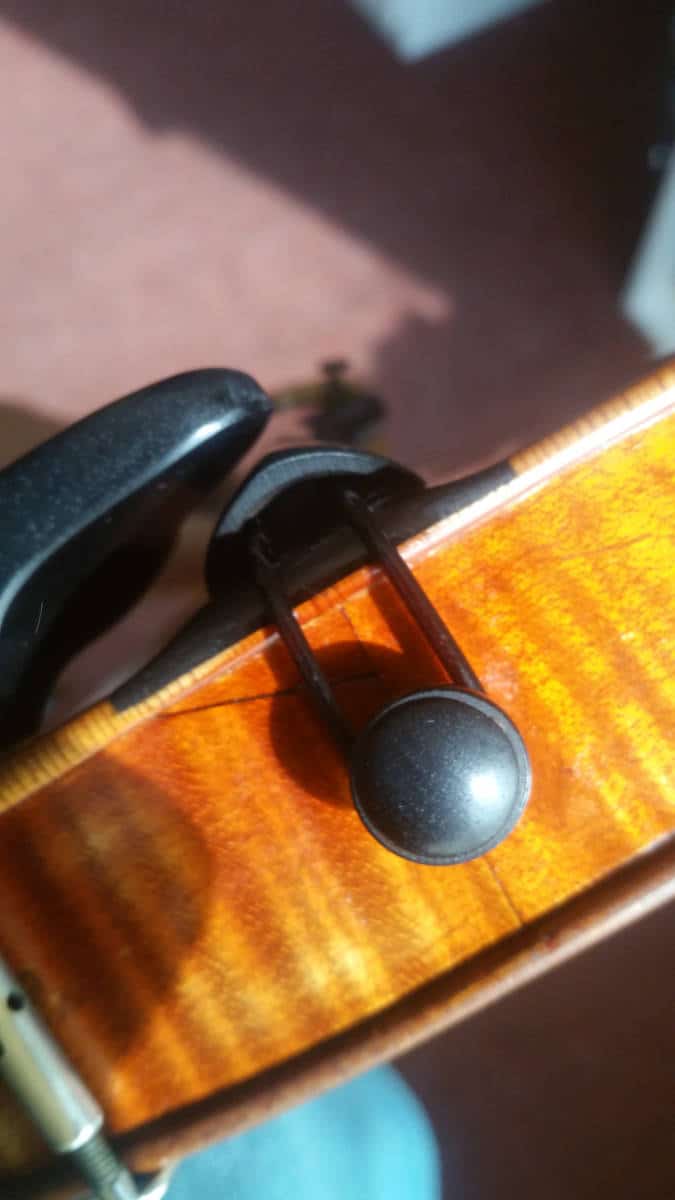
Fake damage
A triangle appears above the button that holds the tailpiece in place. This is formed by a sharp black line on the violin. It is possible that this was done to simulate a repair, like some early imitations with false grooves, scratches or cracks drawn on the violin's surface to give them an antique appearance.
How I feel about this instrument
Faced with so many inconsistencies, I found myself quite astonished by the purchase price of this instrument. I had a very strong impression that something was wrong. Having had it in my hands for only a few hours, I had no more opportunity than that to observe it in depth and do some research.
But then again, as long as the sound pleases and suits the person playing the instrument: how important can its authenticity really be? Just as the price...
You'll also note that at no point did I mention the label.
Is my violin a fake?
It's a tricky question to answer, because after all, it's your instrument. How would you feel if someone told you that your violin wasn't what it was?
In fact, if we look at things in a cold, purely mercantile way, the trade in fakes is the biggest money-maker in the world of instruments. Scams are legion, and I come across so many musicians who have let themselves be dragged into these dark stories. That's why you have to be very vigilant.
Here again, only real expertise can reassure you.
Generally speaking, if it looks like you're getting too good a deal, you may be hiding something. But the worst case scenario is still to pay full price for a counterfeit.
Tips for buying an authentic violin
If you want to buy an authentic violin, you need to be careful: whether you buy from a professional or an amateur, directly or online.
- First and foremost, an instrument is only as good as its certificate. This must be issued by an expert specializing in this particular type of violin.
- Never trust a label - it's the easiest thing in the world to fake.
- Find out the current price of instruments of the same type as the one you wish to buy.
- Get in touch with an independent third party who can give you a neutral opinion (you can always ask me).
Is a genuine violin a better violin?
And this is where the subject gets interesting. In particular, the question of what makes one violin better than another. In fact, what do you think makes a violin valuable?
If you're a dealer, your first priority is to sell it for as much as possible. That's why the best thing for you to do is to find an instrument whose value nobody suspects, and then sell it as genuine. Of course, this can be done more or less honestly.
If you're a musician, what you're looking for is sound and playability. Of course, you might say that the higher the price of an instrument, the better these criteria will be. However, this is not always the case, even if I'm talking about top-of-the-range instruments. You'll always have to invest a minimum amount to enjoy an excellent instrument. On the other hand, this difference can easily amount to hundreds, thousands or millions of euros.
The benefits of a rare authentic violin
An authentic antique violin is first and foremost a rarity. In other words, very few musicians can theoretically have it in their hands. And that's what gives it its history, its emotion, its prestige - in short, its value.
But what do these prestigious violins that go down in history contribute that those that remain in the shadows don't?
Many professional musicians believe that owning a famous violin will bring them fame and success. That it's an essential step in their career, without which they'll never reach the top.
However, without going into too much detail, the instrument isn't everything. In fact, if you turn the problem the other way round, and demonstrate your talent in competitions, you'll have access to these incredible instruments with no problem at all, and without having to break your piggy bank...
What I wanted to tell you
Whatever the case, the most important thing about being a musician is the affection you feel for your instrument. If it suits you in every way and is a perfect musical companion, how important can its authenticity be?
Can you really put a value on your relationship, on the emotions you share with your audience?
Only you can decide.



Hello, I have a violin from my great grandfather's family. here is its description: coffin case, tourte bow, violin with label joseph guarnerius fecit cremonae anno 1725, bernhardt string pouch. there is a small diamond in relief near the soul. what do you think?
Please tell me how to send you pictures thank you very much
thank you
Hello,
You can send me photos at contact@guillaume-kessler.fr.
Thank you very much.
Hello, Mr Keeser,
I wrote to you by e-mail about a violin I found in the basement of our new house (1950).
I'd like you to take a look at it, as I don't know much about "fiddling" and would like to know more about its past so that I can sell it at a fair price.
Merci very much!!!
Hugues
Hello,
On my 1938 Gustave Villaume violin, it is indicated by hand on the back label, "hors série" and "vieux bois".
Do you know how to interpret this information?
thank you for your feedback.
cdt
Hello Mezanger,
Far be it from me to claim that I can interpret the author's thoughts with 100% accuracy. However, the "Hors Série" character may represent instruments that are precisely not mass-produced or under-treated in certain workshops. On the other hand, the term "old wood" refers to the age of the wood used in manufacture. This undoubtedly comes from old stocks, perhaps a hundred years old or more, but sometimes it's just a marketing term to say that the wood has dried properly.
Vous ne parlez pas des violons anonymes c’est à dire sans les belles étiquettes qui font rêver.
Pourtant certains violons anonymes datant du début voir fin 19e sont meilleurs que d’autres. Leur patines très ancienne est aussi très intéressante, et on se retrouve avec un bel objet et qui sonne souvent bien.
Merci.