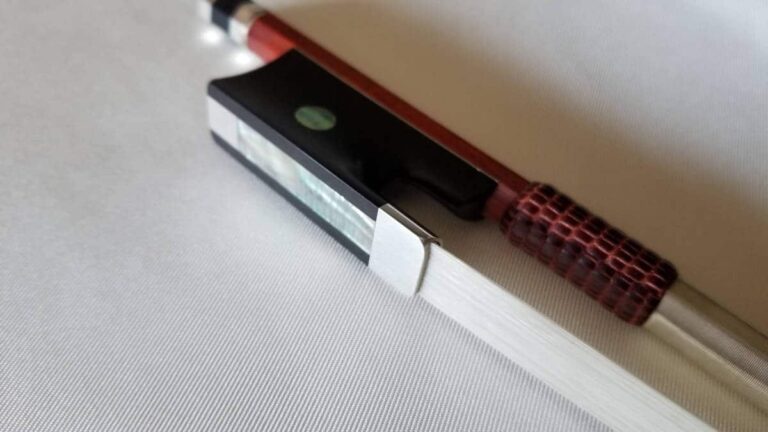
A few years ago, Bohdan Warchal and his team embarked on a huge experiment. Its aim was to determine which rosin worked best with their strings. We're going to retrace their steps in this adventure, see how they went about it and, of course, enjoy the results. Because that's what we're interested in: Warchal's perfect rosin!
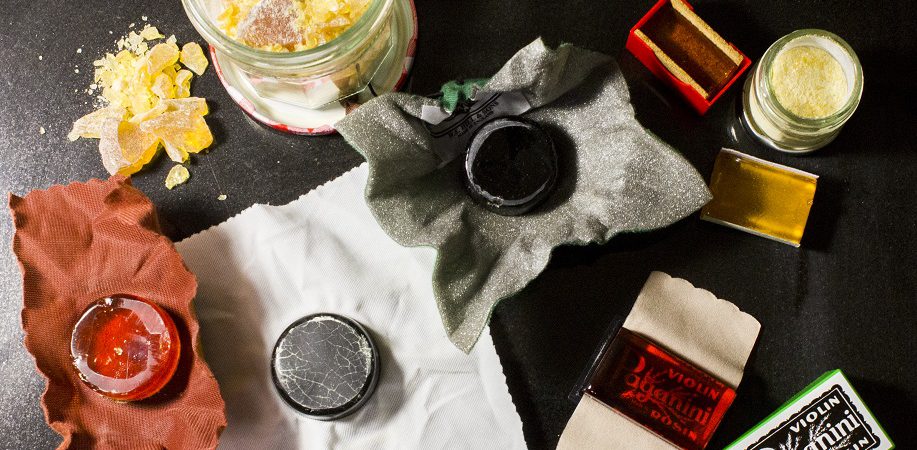
Warchal's perfect rosin
As you probably know, rosin is one of the crucial elements in sound production. Try rubbing your bow over the strings without applying the famous resin mixture and you'll immediately understand. What's more, it's so important that, like the strings, all it takes is a new rosin composition to turn everything upside down. Indeed, the timbre, power and response of a violin, viola or cello can change considerably.
Warchal constantly receives requests from users of their strings asking which rosin works best. That's why they wanted to give a global answer by experimenting with no less than forty different compositions and models of violin rosin.
Although the perception of sound waves is often subjective, the procedure was carried out as scientifically as possible.
The rosin selection method
Initially, the team used forty carbon violin bows, all identical in structure and weight. They decided to use carbon drumsticks rather than pernambucco, in order to maintain maximum homogeneity between all the bows used in the test. An impossible feat with wood!
- Each test phase was then carried out blind, i.e. each wick was simply numbered. Each was assigned a different rosin.
- All participants had to thoroughly clean their strings between each bow change. This was to remove all traces of previous resins, thus avoiding contamination and undesirable mixtures.
- Many professional musicians, as well as Bohdan Warchal himself, took an active part in this study.
At the end of this first part of the study, twenty-nine rosins were immediately discarded.
Then, the remaining eleven specimens were listened to in two different ways: entirely acoustically, but also through recordings.
At this level, the competition became much tighter, and the different rosins were then classified into two categories, because of their very different character:
- Maximum sound projection
- Highest resistance to squeaking
Study favorites
Although Warchal had originally decided to publish the full results of the study, it was decided to reveal only the favorite rosins. This was to avoid damaging the reputation of those not chosen.
Perfect rosins
These rosins all provide excellent lossless sound, enabling the highest levels of performance. Despite manufacturers' recommendations, it has even been found that they can be blended without problems to achieve the desired sound or response.

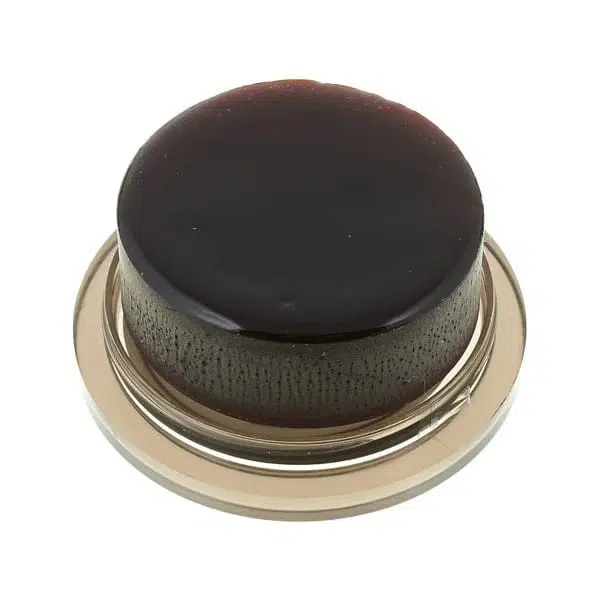
Andrea Solo - Cremona in America
This formula produces a truly sublime timbre, almost effortlessly. It has a very wide dynamic range and is very vocal. That's why it's perfect for all soloists who want to be heard, even in large concert halls.
It is also possible to use Andrea A Piacere, which is more appropriate in certain situations. It is much more suitable for everyday use in smaller rooms.
Andrea Solo results
| Good | Very good | Excellent | No equivalent | |
| Sound-to-noise ratio | - | |||
| Screening in concert hall | - | |||
| Recording use | - | |||
| Friction resistance | - | |||
| Use on a fresh wick | - | |||
| Resistance to accumulation | - | |||
| Use on screaming instruments | - | |||
| Use on hot instruments | - |
These data can only be used exclusively with Warchal cords.
Results A Piacere
| Good | Very good | Excellent | No equivalent | |
| Sound-to-noise ratio | - | |||
| Screening in concert hall | - | |||
| Recording use | - | |||
| Friction resistance | - | |||
| Use on a fresh wick | - | - | ||
| Resistance to accumulation | - | |||
| Use on screaming instruments | - | |||
| Use on hot instruments | - |
These data can only be used exclusively with Warchal cords.
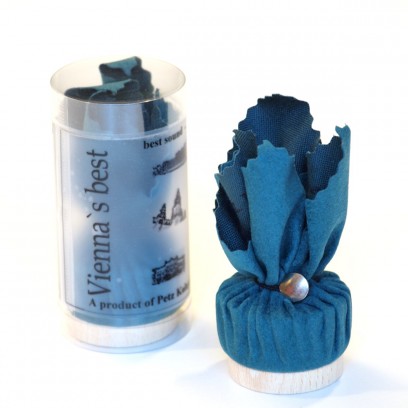
Vienna's Best - Petz Kolophonium
This rosin is truly the softest, and very forgiving. It has been specially developed to create that special, warm, Viennese sound, particularly suited to recordings or instruments that are too light. It can also be applied to the bow after a change of synthetic strings. This avoids the very metallic appearance of the first hours of playing.
Vienna's Best results
| Good | Very good | Excellent | No equivalent | |
| Sound-to-noise ratio | - | |||
| Screening in concert hall | - | |||
| Recording use | - | |||
| Friction resistance | - | |||
| Use on a fresh wick | - | |||
| Resistance to accumulation | - | |||
| Use on screaming instruments | - | |||
| Use on hot instruments | - |
These data can only be used exclusively with Warchal cords.
Mixing pleasures
[pullquote align="right"]
In fact, the perfect rosin according to Warchal is two rosins!
[/pullquote]
Although you now know the perfect rosin according to Warchal. It's also possible to mix them together to achieve special effects.
It's always best to use only one type of rosin per wick, as blends prevent the full character of a rosin from being expressed. However, if you use Andrea Solo, you can soften your sound and response by applying Vienna's Best. You can also restore bite by doing the opposite.
With these two rosins, you can really adjust your sound to what you really want to achieve, whatever the situation. For example, if you're playing different pieces in the same evening and have only one bow.
If you prefer to use just one rosin, perhaps you should opt for Andrea A piacere. The result is very similar to the previous blend.
The best rosins in my store
Now that you know all about the rosins recommended by Bohdan Warchal, you can find them in my store. If you don't use Warchal strings, these high-quality rosins work very well with a wide range of string models and brands.