
Depuis que je l’utilise, j’ai pu me faire une certaine expérience avec le crin synthétique. J’ai également pu me baser sur les retours de différents types de clients sans oublier les collègues archetiers avec qui j’en ai discuté. Je vais donc vous en parler dans cet article. Cela vous donnera, je l’espère, plus d’informations sur ce type de produit. Attention, le sujet pourrait paraître tendancieux, mais il n’en est rien !
À savoir que dans cet article je ne parlerai que du crin synthétique Coruss et non pas du fil de pêche ou je ne sais quelle autre invention pour jouets musicaux.
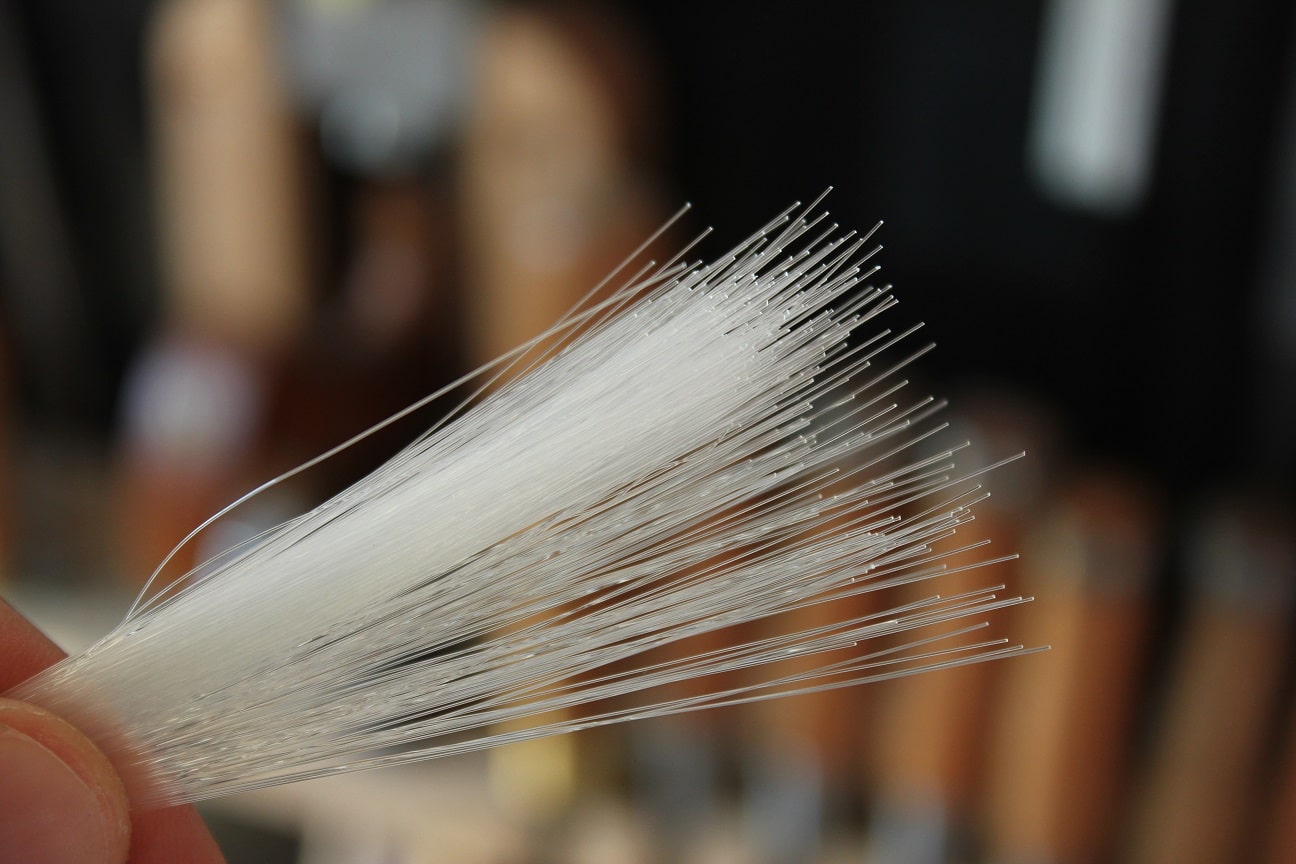
Le crin synthétique à l’utilisation
Bien sûr, la première question que l’on se pose est : est-ce que ça marche ? La réponse est très simple, oui, ces crins fonctionnent tout autant que les crins d’origine naturelle. Ils remplissent parfaitement leur mission de mettre la corde en mouvement. Par contre, si on utilise la même technique et la même colophane qu’avec le crin naturel, le résultat sonore et les sensations seront différentes :
- Plus de volume, ce qui pourra déplaire à certains.
- Une homogénéité dans le son de la hausse à la tête.
- Plus de clarté, ce qui a aussi des inconvénients.
- Une longévité accrue et un entretien plus facile.
- Varie de manière constante dans sa longueur.
- En fait la sensation et le frottement sont différents.
Voici en résumé les résultats que l’on peut espérer avec de telles mèches. Pour ce qui est du reste, il est important de vous faire votre propre avis. Comme tout type de matériel, cela va fonctionner dans certains cas et sera à éviter dans d’autre.
Quelques remarques concernant le crin synthétique
D’une manière générale, si vous avez l’habitude d’utiliser les mêmes mèches, archets et colophane. Il est possible que vous deviez vous adapter pour obtenir le même son que précédemment. D’un point de vue purement technique je ne vous serai d’aucune aide… Par contre pensez qu’adapter la colophane permettrait l’adaptation de la réponse pour vous rapprocher de vos anciennes sensations. Dans l’idée, je pense que de partir sur une recette plus sèche pourrait faire l’affaire. Toutefois, il n’y a pas de réponse absolue et il vous faudra vous-même trouver la combinaison gagnante.
De même que lorsqu’on découvre un nouvel archet ou instrument, il faut apprendre à le dompter avant de pouvoir totalement exploiter son potentiel.
D’autre part, il y a un aspect assez regrettable au crin synthétique : il ne convient pas forcément bien aux débutants. Je m’explique, le crin donne un caractère très clair au son, de plus, le volume est lui aussi amplifié. C’est pourquoi les joueurs qui n’ont pas encore beaucoup d’aisance avec l’archet mettront en avant leur défauts de jeu. De ce point de vue, il est vrai que les élèves et les professeurs risquent d’assez rapidement avoir mal à la tête. D’un autre côté, cela permettrait aussi de mettre en évidence les défauts pour les travailler. Ce n’est qu’une question de positionnement.
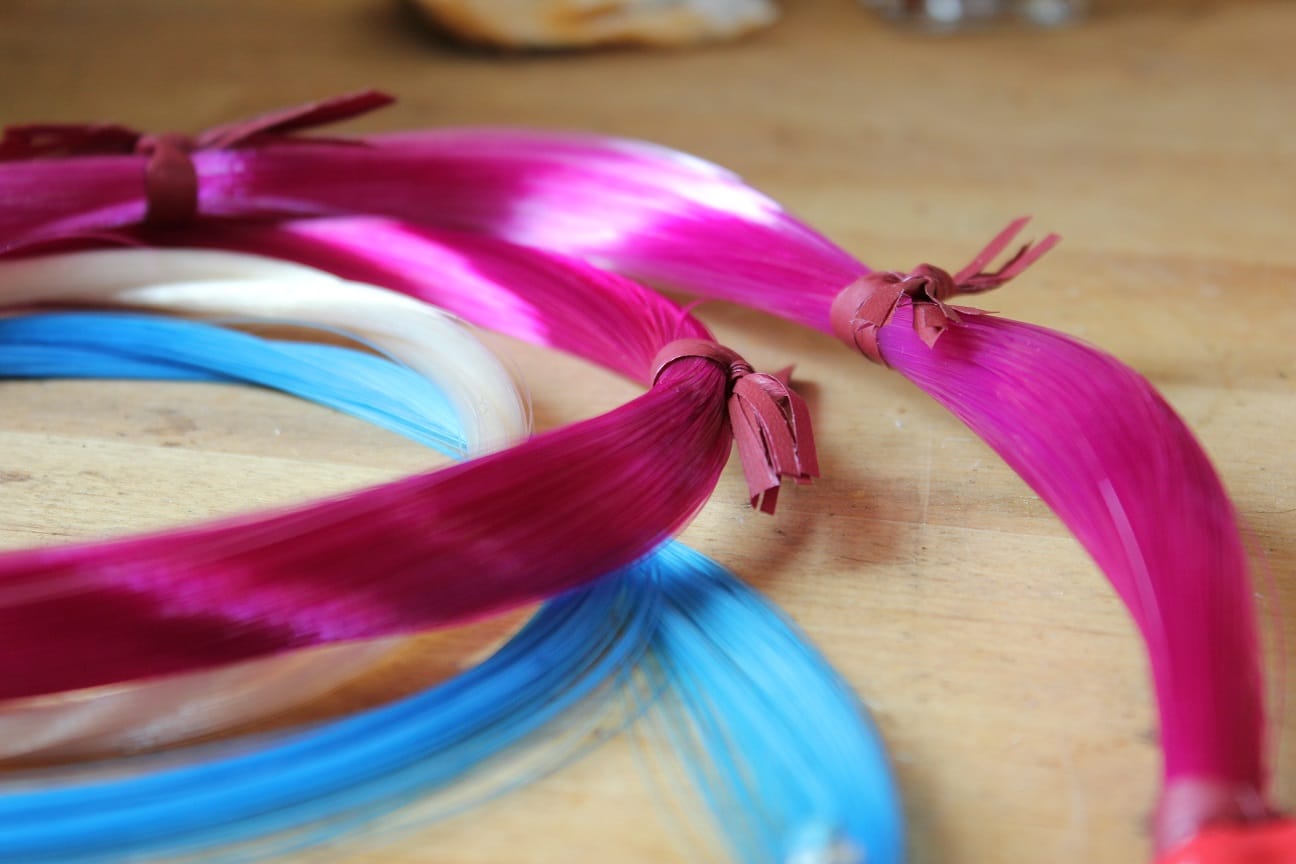
Le crin synthétique du point de vue des luthiers et archetiers
Pour les musiciens, il n’y a aucun doute sur le fait de devoir s’adapter à un nouvel outil. Il ne faut cependant pas oublier qu’il y a aussi quelques transpositions à faire du côté des artisans.
Dans un premier temps, la caractéristique hydrophobe de ce crin oblige un travail plus précis dans la gestion de la mèche. Elle ne peut en effet pas devenir élastique avec un trempage. De plus, il est plutôt risqué de faire intervenir la flamme dans la manipulation. Selon le fabricant, il est possible de passer la flamme pour la rétracter. Il faudrait dans ce cas utiliser de l’eau en permanence pour éviter la fusion des fibres. En outre, je ne sais pas ce que cette exposition à la flamme a comme effet sur les écailles alors je préfère tout simplement éviter. Cela dit, il paraît que certains utilisent un sèche-cheveux avec succès.
Ensuite, il faut comprendre que cette mèche va beaucoup se détendre dans un premier temps avant de trouver sa stabilité. C’est exactement comme les cordes synthétiques lors de leur première installation. C’est pourquoi il est important de la mettre en place assez courte dès le départ, surtout sur les archets en carbone. Sinon la hausse va être très rapidement en bout de course. Pour ma part, je simule la tension de l’archet afin de stabiliser la mèche au maximum avant sa sortie de l’atelier.
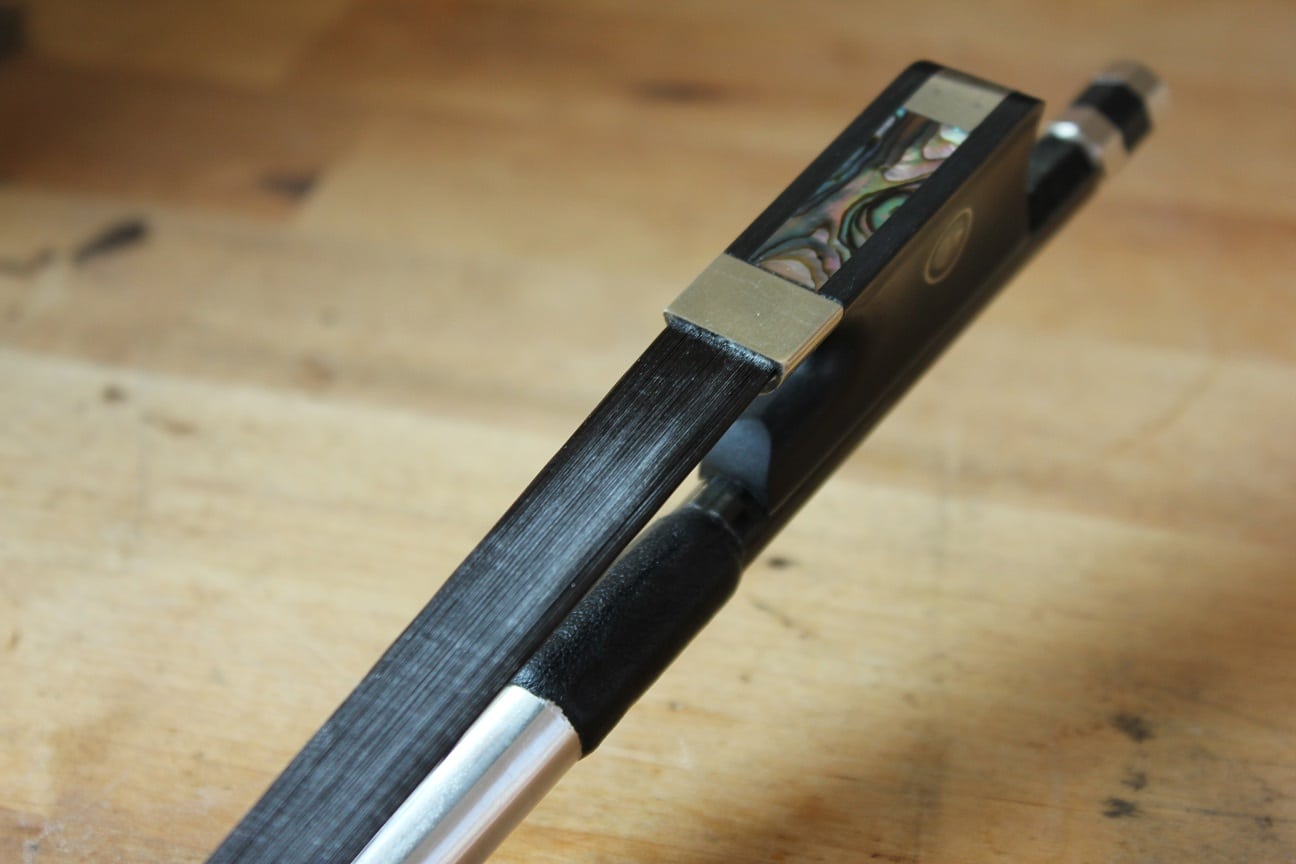
Un travail légèrement différent, mais surtout plus précis
Je voulais aussi parler du diamètre constant des fibres car le design de l’archet prévoit un rétrécissement de la mèche dans la mortaise de tête. C’est infime, mais l’épaisseur du crin est plus importante du côté jeune (à la hausse) qu’à la tête (le côté vieux). L’épaisseur constante du crin synthétique fait que cet ancien design comprime la mèche et l’empêche parfois de bien se placer. C’est pourquoi cette adaptation qui serait en pratique très facile à réaliser, serait assez ennuyeuse si l’on devait repasser au crin naturel… C’est pourquoi il faut encore une fois être très précis sur la quantité du fagot en trouvant le bon compromis.
Enfin, au niveau du rendement, il faut savoir que tous les crins sont utilisables. C’est un énorme avantage. Il faut savoir que dans les bottes de crin actuelles, les archetiers peuvent passer des heures à les trier. C’est pourquoi les plus pointilleux jetteront jusqu’à la moitié du poids de départ. Une perte de temps et un gaspillage puisque tout part à la poubelle.
Cela aurait été un vrai bonheur si ce crin fonctionnait mieux avec la pratique des débutants, cela éviterait de gâcher du temps sur les archets de qualité inférieure. Enfin, ce serait aussi l’occasion d’augmenter considérablement la longévité de tous ces archets « jetables » qui n’ont comme durée de vie que l’utilisation de leur mèche de mauvaise qualité.
Le crin de synthèse et la pollution
J’en profite pour aborder le sujet sensible après avoir mentionné le gaspillage. En effet, parmi les problèmes majeurs de notre société sont : la pollution, le recyclage, l’utilisation de matériaux non renouvelables.
Et en effet, le crin synthétique est une matière plastique issue de la chimie organique. Même si beaucoup de personnes vont le décrier comme polluant il possède toutefois des avantages par rapport au crin naturel :
- Le crin synthétique a une longévité bien supérieure à sa version naturelle. Ce qui va demander une consommation moins importante au fil des années.
- Il est aussi produit localement (pour nous en tout cas), ce qui lui donne au final une plus faible empreinte écologique que les produits importés par avion ou bateau de l’autre bout du monde (le crin naturel).
- Ses éléments constitutifs sont tous autorisés dans la filière de traitement des déchets en Europe.
Quant aux crins naturels, il faut aussi se poser la question de quels détergeants, traitements, conservateurs et autres bains chimiques ils ont subit. Et surtout qu’est-ce que cela va devenir quand on va les brûler ou les jeter ?
Enfin, pour ce qui est des cordes, elles posent exactement les mêmes problèmes. Mis à part Warchal, aucun fabricant n’a mis en place, à l’heure actuelle, de programme de recyclage de ses matériaux. Ce n’est au final ni mieux ni pire que les autres produits disponibles aujourd’hui.
Voilà quelques réflexions supplémentaire sur mon expérience avec le crin Coruss. Si vous avez des questions ou commentaires, n’hésitez pas à les formuler en bas de la page. D’autre part je tiens à préciser que je ne suis pas pour ou contre l’utilisation de n’importe quel crin. Je propose les outils et les musiciens en disposent, je reste quant à moi focalisé sur mon objectif de vous fournir la meilleure sonorité et transcender votre expérience de jeu.





Article très intéressant Quel est le diamètre de ces fibres et leur mode de fabrication?
Y a t il d’autres fibres naturelles utilisables, le chanvre, le lin, la soie? Les cheveux?
bien sincèrement
Merci ´pour cet article, j’utilise les mèches Coruss depuis 5 ans sur mon archet d’alto et suis entièrement satisfait de l’utilisation. La longévité de la mèche est bluffante malgré une pratique intensive de tout les répertoires.
Un site agréable à consulter.
Des articles vraiment bien construits, clairs, illustrés, où on apprend une foule de choses intéressantes.