Tout ce qui est important à propos du violon, aussi bien en le fabriquant qu’en le jouant, réside dans les plus petits détails. Cette règle s’applique également lorsque on décide d’acheter son instrument en ligne. Pourtant, il est vraiment difficile d’estimer quelle attention a été mise en oeuvre pour le montage sur les violons d’étude commandés par Internet. En effet, si le montage est bâclé, il est fort probable qu’un instrument même onéreux et de bonne facture, ne donne que de piètre performances.
Qu’est-ce que le montage sur les violons d’étude ?

Le montage est en fait la partie finale de la fabrication d’un violon. Il s’agit en fait d’ajustements minutieux réalisés sur :
- Le chevalet
- L’âme
- Les chevilles
- Les sillets
- La touche
- Les cordes
- Le cordier
- Mais encore bien d’autres éléments de finition
C’est ainsi qu’un violon, même bon marché, mis entre les mains d’un luthier expert peut facilement rivaliser avec des instruments bien plus chers en terme de sonorité et de jouabilité. En fait, tout n’est qu’une question d’attention aux détails ! C’est aussi le temps passé sur ces détails qui coûte le plus cher. Bien évidemment, un violon d’étude n’aura peut-être pas le potentiel d’un très bon Stradivarius, mais un bon montage lui permettra tout de même d’exploiter toutes ses possibilités.
Pourquoi le montage sur les violons d’étude est souvent mauvais ?
Les magasins de musique généralistes, physiques ou en ligne, proposent des violons d’étude à très bas prix. Afin de proposer des prix abordables, ceux-ci sont pour la plupart fabriqués dans les pays de l’Est ou en Chine. Cette fabrication peut avoir lieu dans des petits ateliers artisanaux ou à la chaîne dans des usines (pour les moins bon d’entre-eux).
Dans le cas des ateliers de lutherie, les violons, altos ou violoncelles peuvent être construits par de très bons ouvriers mais dont les compétences ne sont souvent limitées qu’à la fabrication. Ils n’ont pour la plupart pas l’expertise dans le domaine du montage ou des ajustements. C’est pour ça que même les meilleurs instruments arrivent en France sans montage ou alors avec le plus strict minimum. D’un autre côté, faire un montage parfait en Asie serait une perte de temps car quelques semaines dans les transports pourraient fortement compromettre celui-ci. En effet, dans les containers maritimes avec une hygrométrie et une température fortement variable les instruments n’en sortent pas toujours indemnes…
De ce fait, si le magasin dans lequel vous achetez votre instrument n’est pas doté d’un atelier de lutherie spécialisé. Vous n’aurez surement droit qu’au montage très approximatif dont le violon, alto ou violoncelle a été pourvu avant de quitter son lieu de fabrication. De manière générale, les résultats seront bien en dessous du réel potentiel de l’instrument dans lequel vous avez investi.
Quels sont les avantages d’un instrument bien monté ?
Il y a des raisons évidentes pour lesquelles vous voudriez que votre achat délivre tout son potentiel sonore. Mais un montage réalisé par un expert procure bien plus que la qualité du son et le timbre de votre instrument. En effet, la jouabilité et le confort de jeu seront également accrus : ce qui vous permettra de pratiquer dans des bonnes conditions pendant plus longtemps. Finalement, pourquoi se torturer avec un mauvais montage alors que l’instrument est déjà si difficile à apprendre ?
Voici 5 raisons de ne pas négliger le montage de son instrument :
- La durée de vie ne sera pas compromise par des pièces inadaptées (âme, chevalet). Vous pourrez ainsi profiter de votre violon plus longtemps !
- Une sonorité et un timbre accrues, pour prendre le maximum de plaisir en jouant.
- Un confort et une jouabilité optimum pour pouvoir jouer longtemps sans se faire mal et apprendre plus vite.
- Une facilité d’accordage et une longévité supérieure des cordes
- Un prix de revente plus intéressant si vous décidiez au final de vous en séparer.
Le montage dans un atelier de lutherie
[pullquote align= »right »]
Lorsque vous constatez des prix différents pour un instrument de la même référence. Il est bon de se demander d’où vient cette différence : les éléments du montage ne sont pas souvent cités mais représentent une grande partie de la valeur d’un violon d’étude.
[/pullquote]
Le montage sur les violons d’étude représente une grosse partie de l’investissement de départ. Il peut en effet facilement atteindre la valeur de l’instrument lui-même. Suivant l’atelier, le montant du travail effectué pour le montage peut rapidement atteindre de 150 à 300 euros. C’est pourquoi les instruments correctement montés coûtent toujours plus cher à l’achat. Cependant, ils seront beaucoup plus agréables à jouer et nécessiteront moins d’interventions dans le futur.
Un luthier contentieux ne sera jamais satisfait avec le montage des instruments qui proviennent des usines ou ateliers lointains. Il préférera toujours appliquer ses propres techniques et matériaux pour obtenir les meilleurs résultats possibles. Les parties concernées sont souvent les suivantes :
La taille du chevalet
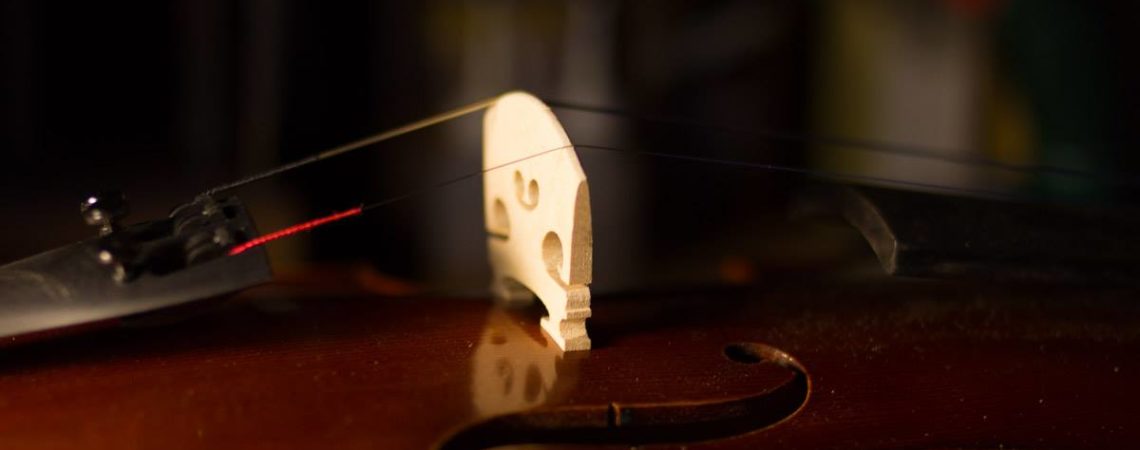
Le chevalet est d’une énorme importance sur le son et la jouabilité d’un violon. Les chevalets pré-installés sont souvent grossiers, avec trop de matière et taillés dans des bois inappropriés. Ils agissent donc naturellement comme une sourdine. Des ajustements infimes de ses courbes ou épaisseurs peuvent faire de très grands changements.
Il s’agit en fait d’une pièce qui doit être minutieusement taillée, propre à chaque instrument, elle doit être réalisée sur mesure par le luthier pour donner les meilleurs résultats. De plus, le choix du bois et de son séchage est d’une importance cruciale.

L’ajustement de l’âme
Une âme est une petite pièce de bois installée entre la table et le fond d’un violon. Si celle-ci est taillée et à la va-vite et forcée dans l’instrument, non seulement le potentiel sonore sera limité mais les chances de fractures sont également accrues. En outre, une âme inappropriée aura plus tendance à tomber, vous laissant dans l’embarras de trouver un luthier pour la réinstaller.
Rectification de la touche
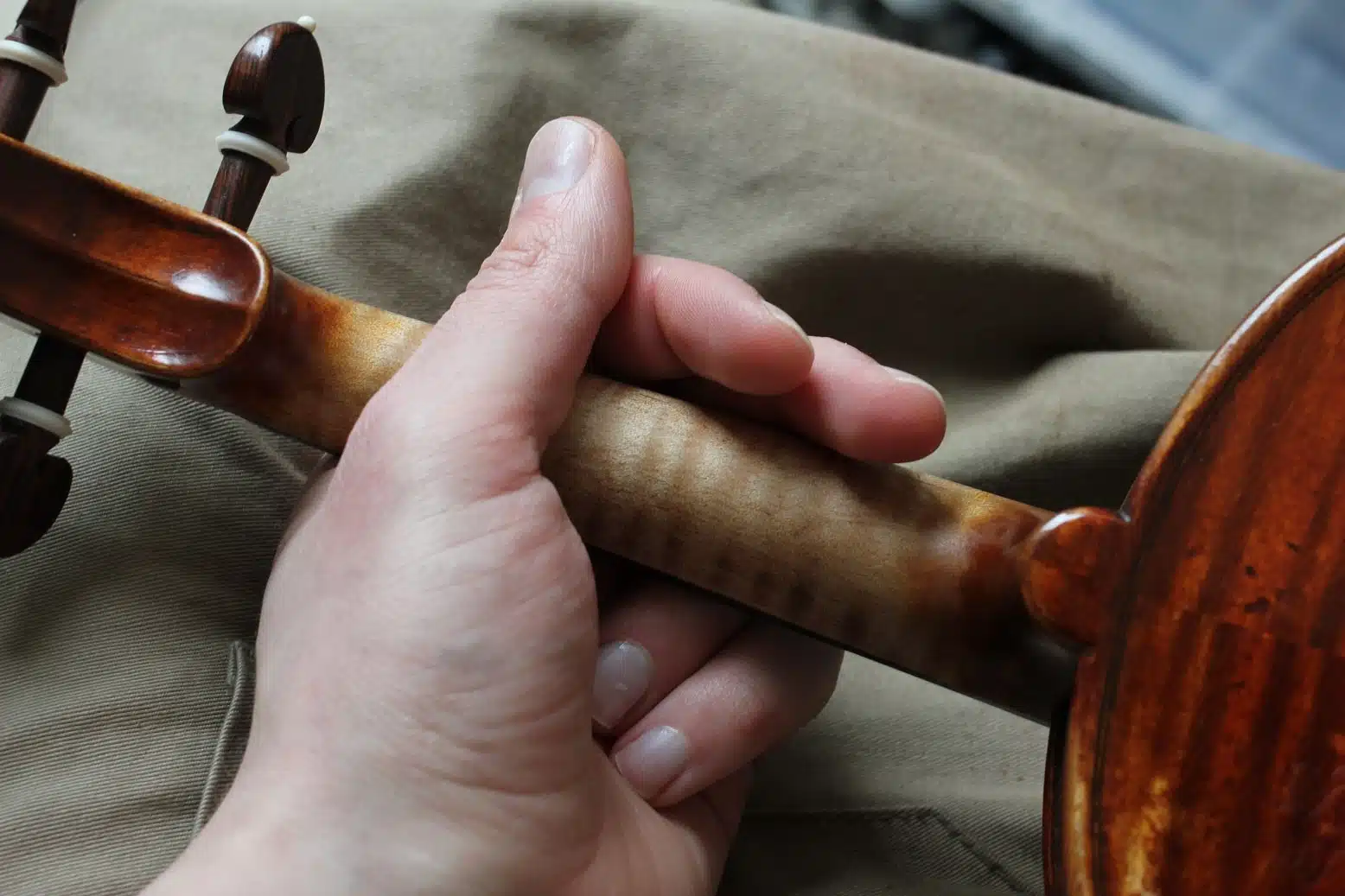
Il est très souvent nécessaire de recoller une touche déviée, de même il faut la redresser (aplanir sa surface, lui redonner une voûte correct et éliminer les imperfections) puis la polir. Il sera aussi nécessaire de reprendre le sillet pour que celui-ci ne fasse qu’un avec la touche. Le sillet permettra aussi d’ajuster la hauteur des cordes dans les positions basses.
Le réglage des chevilles
Les chevilles doivent être parfaitement ajustées et lubrifiées afin de pouvoir fonctionner correctement. Elles doivent être en mesure d’accorder parfaitement toutes les cordes sans l’aide de tendeurs, sans grincer et sans à-coups.
Les cordes d’étude
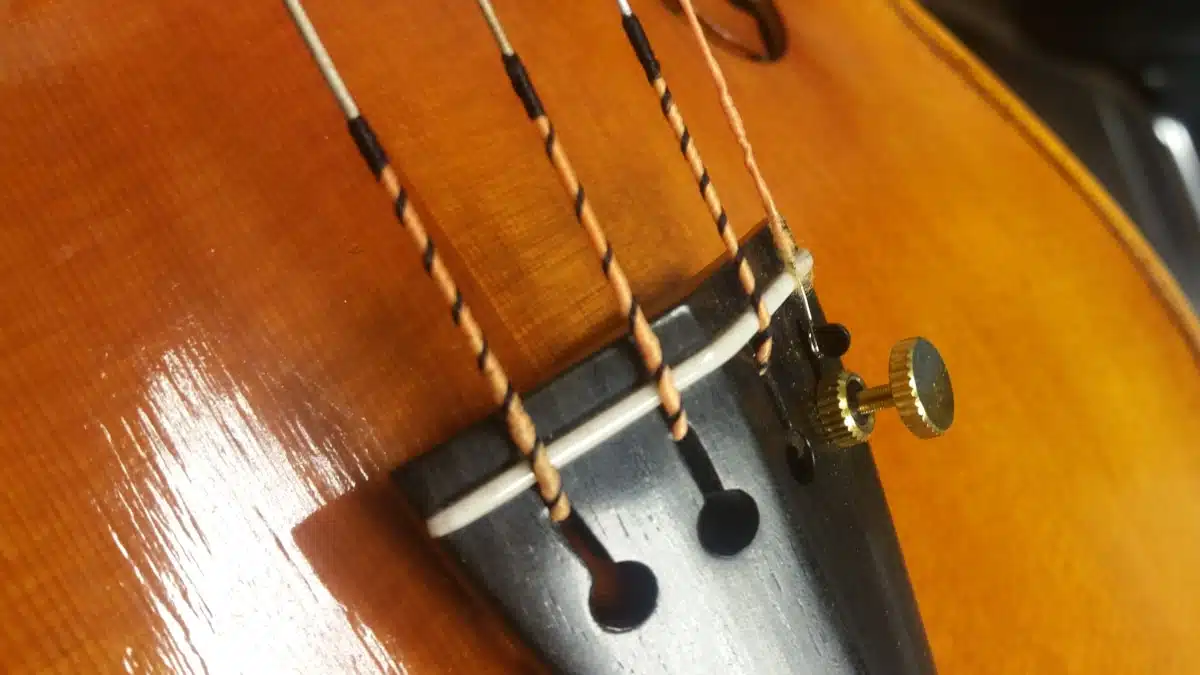
Les cordes qui sont parfois montés en usine sont tout juste bonnes à tenir le chevalet en place. Il est presque indispensable de les remplacer pour pouvoir espérer tirer quoi que ce soit d’un violon, alto ou violoncelle d’étude. Elles peuvent vraiment sublimer le rendu d’un instrument sans effectuer de changement supplémentaire. Il existe de très nombreuses cordes de qualité à prix abordable pour l’étude.
L’achat en ligne de violons d’étude
N’oubliez pas de considérer ces différents éléments lorsque vous chercherez à acheter un instrument du quatuor en ligne. Bien sûr, il est toujours mieux d’aller chez son luthier local, vous pourrez ainsi voir et essayer ce qu’il propose avant de décider de l’acheter.
Néanmoins si vous n’en avez pas près de chez vous, que vous ne savez pas où aller, ou que vous n’êtes pas satisfait du choix qu’on vous propose : vous pouvez également vous rendre sur Internet. En effet, certains luthiers proposent aussi leurs services spécialisés sur la toile. Ceux-ci vous proposeront d’acquérir des violons, altos ou violoncelles mais aussi des accessoires accompagnés de prix et de services avantageux.
Par exemple, le montage sur les violons d’étude que je propose dans ma boutique en ligne est presque aussi flexible que si vous vous rendiez dans mon atelier. Découvrez ce que je propose dans cet article :
[blog_posts items= »1″ orderby= »date » ids= »6211″]