La question des cordes est un sujet vibrant pour des nombreux violonistes. En effet, elles occupent une place centrale dans le résultat sonore de l’instrument en impliquant à la fois sur le timbre et la jouabilité. C’est pourquoi leur choix méticuleux est essentiel. Seulement voilà, il existe un nombre vertigineux de modèles et de marques, venant dans des tensions et des versions différentes. Ainsi, il est probable que vous soyez complètement perdus lors du choix de votre jeu de corde, notamment si vous n’avez pas une grande expérience avec les différentes possibilités qu’elles offrent. Je vous invite donc à suivre ce guide, qui vous présentera les meilleures cordes d’étude pour violon afin que vous puissiez choisir avec assurance celles qui vous conviendront le mieux.
Les meilleures cordes d’étude pour violon
Tout d’abord, qu’est-ce qu’une corde d’étude ? C’est important de le préciser car cette notion est souvent mal comprise. En fait, pour rester simple, il s’agit d’une corde qui permet l’apprentissage du violon et comme tout musicien est dans une perpétuelle démarche d’amélioration : toutes les cordes peuvent faire office de cordes d’étude. Toutefois, je vais me limiter à l’aspect pratique de la chose, en désignant l’apprenant comme une personne dont jouer l’instrument n’est pas le métier et dont le budget n’est pas illimité. C’est pourquoi je trouve important d’identifier ces cordes par les caractéristiques suivantes :
- Premièrement, un excellent rapport qualité / prix qui permettra d’obtenir les meilleures résultats avec un budget limité.
- Ensuite, une sonorité agréable, plutôt portée sur la richesse et l’intimité plutôt que la puissance.
- Enfin, une excellente stabilité et une bonne durée de vie.
Point important sur les meilleures cordes d’étude pour violon
En vérité, il n’existe pas de corde ultime, qui fonctionnera sans aucun problème dans toutes les configurations. C’est pourquoi je vais vous présenter les modèles qui vous apporteront selon moi le plus de satisfaction. Il faudra dans ce cas s’assurer que celui que vous choisissez corresponde à ce dont vous avez besoin. Je ferai d’ailleurs un résumé de tout cela à la fin de l’article.

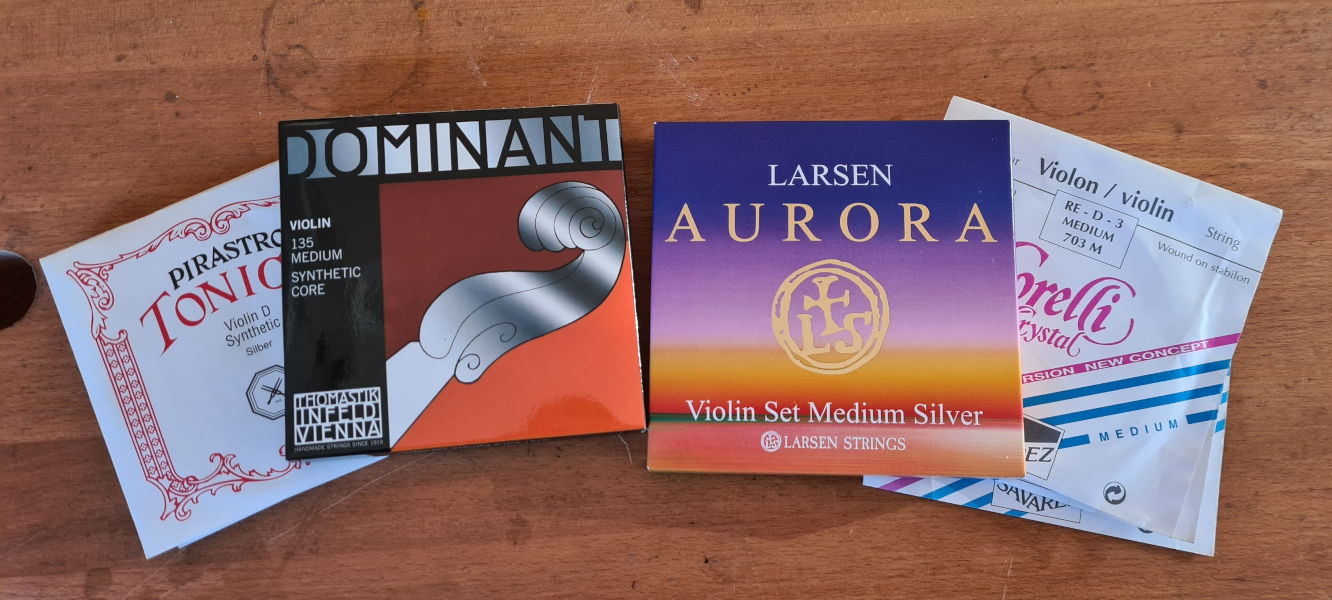
Thomastik Dominant
- Prix : 48 €
- Sonorité : Neutre
Pour bien commencer cette présentation, voici les cordes les plus connues et utilisées. Ce sont tout d’abord les plus anciennes cordes synthétiques et sont bien implantées chez les différents marchands. C’est pourquoi elles seront généralement très faciles à trouver, même dans les magasins locaux.
Ce sont des cordes reconnues pour l’étude, grâce à leur grande stabilité et leur facilité de jeu. Elles sont aussi reconnues pour leur stabilité et leur timbre, qui bien que très neutre met en évidence les vibrations naturelles de l’instrument. C’est d’ailleurs ce côté qui est à double tranchant, car si elles fonctionnent bien sur les bons instruments, elles ne permettront jamais de compenser le caractère d’un violon trop brillant ou trop sombre.
Pour économiser quelques euros, vous avez aussi sa version alternative. Toutes les cordes, sauf la chanterelle, sont les mêmes que le fameux set Dominant. Le seul remplacement du Mi, qui ne plaît pas à tout le monde, permet d’avoir un peu plus de punch et de répondant dans les aigus.

Pirastro Tonica Gold Label
- Prix : 37 €
- Sonorité : plus claires
La version Gold Label de la série Tonica est plutôt intéressante. Ces cordes se sont popularisées grâce à leur excellent rapport qualité prix. Elles équipent ainsi de nombreux instruments et sont même utilisées régulièrement par des professionnels. Elles sont très souples à l’utilisation et disposent d’une très bonne définition à l’oreille. Comme leur nom l’indique, elles apportent un peu de tonus aux violons un peu trop mous.
Larsen Aurora
- Prix : 42 €
- Sonorité : Plus directes et brillantes
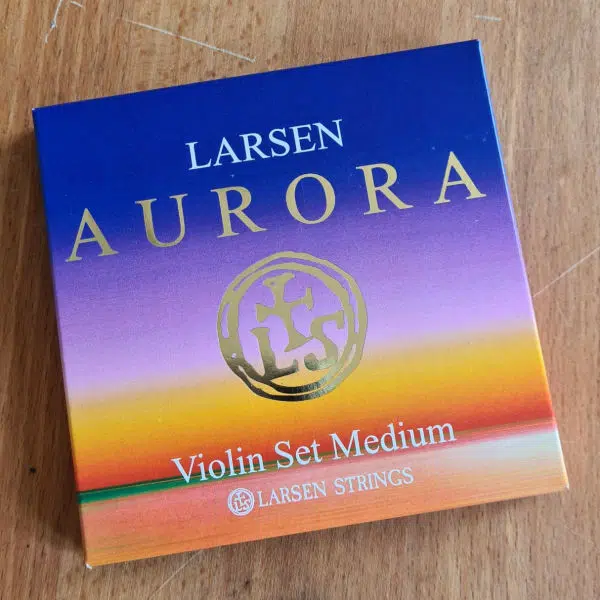
Les Larsen Aurora sont une tentative de copie de la formule Dominant, avec bien sûr quelques différences. Elles se présentent comme plus directes et clarteuses, affinant et sculptant la texture sonore du violon. Elles s’utilisent très bien sur les violons qui manquent d’énergie.

Corelli New Crystal
- Prix : 47 €
- Sonorité : Propre et chaleureux
Les Crystal sont reconnues pour la souplesse de leur jeu et la chaleur de leur timbre. Ce qui en fait des cordes idéales pour commencer en se faisant plaisir, d’autant plus qu’elles adoucissent énormément les violons. Ce qui permet de rendre supportable tous les instruments qui sont très puissants dans l’oreille. Par là j’entends les instruments au timbre très cristallin et suraigu que l’on retrouve fréquemment chez les débutants ou en étude.
Les meilleures cordes d’étude pour violon : quoi choisir ?
Après la présentation des meilleurs modèles, il va bien falloir que je vous aide à trancher. C’est pourquoi voici plusieurs situation :
Si votre violon est assez équilibré
Vous pouvez opter pour les Dominant sans vous tromper. Elles seront efficace et répondront à tous vos besoin en laissant les caractéristiques naturelles du timbre d’exprimer.
Si votre violon est trop criard et clair
Il sera préférable dans cette situation de choisir les Corelli New Crystal. Celles-ci vont arrondir et complexifier le son de votre instrument pour le rendre moins strident.
Si votre violon est trop diffus ou sombre
Vous pourrez sans problème choisir les Tonica et Aurora, qui apportent tonus et lumière à votre instrument. Elles permettent ainsi de revigorer les instruments trop timides et permettent de concentrer le son en le rendant plus incisif.
Les pires cordes pour l’étude
Même si je vous ai déjà conseillé sur les cordes à choisir, je voulais également aborder le sujet des cordes à éviter à tout prix.
Premièrement, les cordes en acier à bas coût. En effet, même si le prix d’un tel jeu de corde peut vous paraître attractif, parfois entre 5 et 15 euros, ce n’est pas un bon investissement. Elles seront non seulement très difficiles à jouer sous les doigts et n’offriront probablement pas la sonorité que vous attendez sur un violon. À moins que celui-ci soit électrique.
Ensuite, je vous déconseille aussi les cordes en boyau, qui peuvent vous faire vivre un véritable enfer. Elles sont non seulement assez onéreuses, ont une faible durée de vie et malgré leur sonorité agréable sont très instables dans l’accord.
Pour aller plus loin
Je vous invite à lire cet article qui aborde les différents types de cordes.
[blog_posts orderby= »date » ids= »5569″]