
Le violon est un instrument de musique à cordes frottées. C’est à dire que dans son utilisation normale, un archet est utilisé pour mettre les cordes en vibration. Sa création remonte au XVIe siècle et celui-ci occupa rapidement une place dominante dans la musique classique européenne, à tel point qu’il est souvent qualifié d’instrument roi !
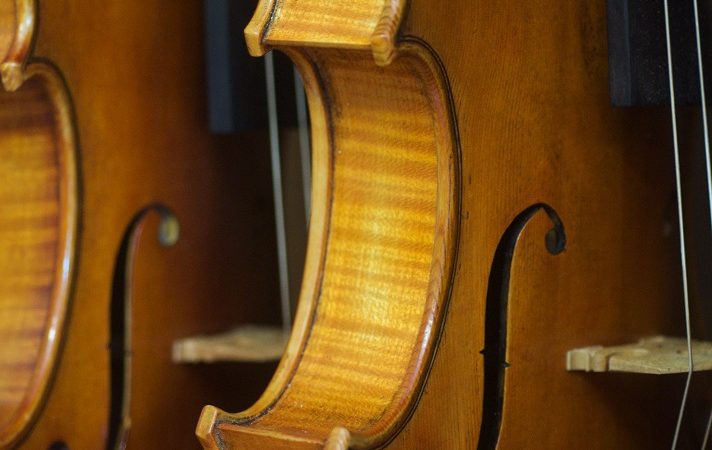
Le quatuor à cordes
[pullquote align= »right »]
La contrebasse, bien que fortement apparentée, n’est pas considéré comme un instrument du quatuor. De plus, tous les luthiers du quatuor ne désirent pas forcément traiter avec les contrebasses, il faudra faire appel à un spécialiste.
[/pullquote]
Le violon est l’instrument le plus petit et de tessiture la plus aiguë parmi sa famille. Celle-ci est souvent appelés par la dénomination « instruments du quatuor ». Ce nom fait référence à l’ensemble classique du quatuor auquel de nombreux compositeurs célèbres se sont essayés et dont la forme la plus populaire est :
- Premier violon
- Second violon
- Alto
- Violoncelle
Chaque instrument représentera alors une des quatre voix de l’harmonie classique : soprano, alto, ténor et basse.
C’est pour cela qu’en français, un luthier du quatuor est un artisan spécialisé dans la fabrication, la réparation et l’entretien des instruments de la famille du violon.
L’histoire du violon
Le violon tel que nous le connaissons aujourd’hui a beaucoup de points communs avec celui du XVIe siècle. Mais celui-ci a tout de même beaucoup évolué au cours de son histoire. Ses premières formes apparurent probablement dans la région de Milan au début du XVIe siècle. Personne ne peut cependant réellement affirmer aujourd’hui si ce fut à Crémone ou Brescia que l’aventure commença. Dans tous les cas Andrea Amati (1505-1577) est l’un des luthiers qui s’illustra le plus tôt pour ses chef-d’œuvres d’une grande beauté. Il est à l’origine d’une dynastie de luthier qui allait former et influencer les travaux des plus illustres luthiers : parmi eux des membres de la famille Guarneri et Stradivari. Autant de noms qui ont finalement contribués à la renommée de Crémone : la capitale mondiale de la lutherie du quatuor.
À ses premiers balbutiements, le violon, souvent qualifié de criard, n’est guère adapté à la musique en vogue de l’époque. Il se retrouve surtout à servir la musique traditionnelle et accompagner les danses. Ce n’est qu’à travers ses premiers virtuoses que les compositeurs ainsi que le public ne perçoivent toute l’étendue du potentiel de cet instrument qui marquera à jamais le monde de la musique.
Le plus ancien violon qui nous est parvenu est probablement un des 24 violons commandé par le roi de France Charles XI à Andrea Amati en 1560
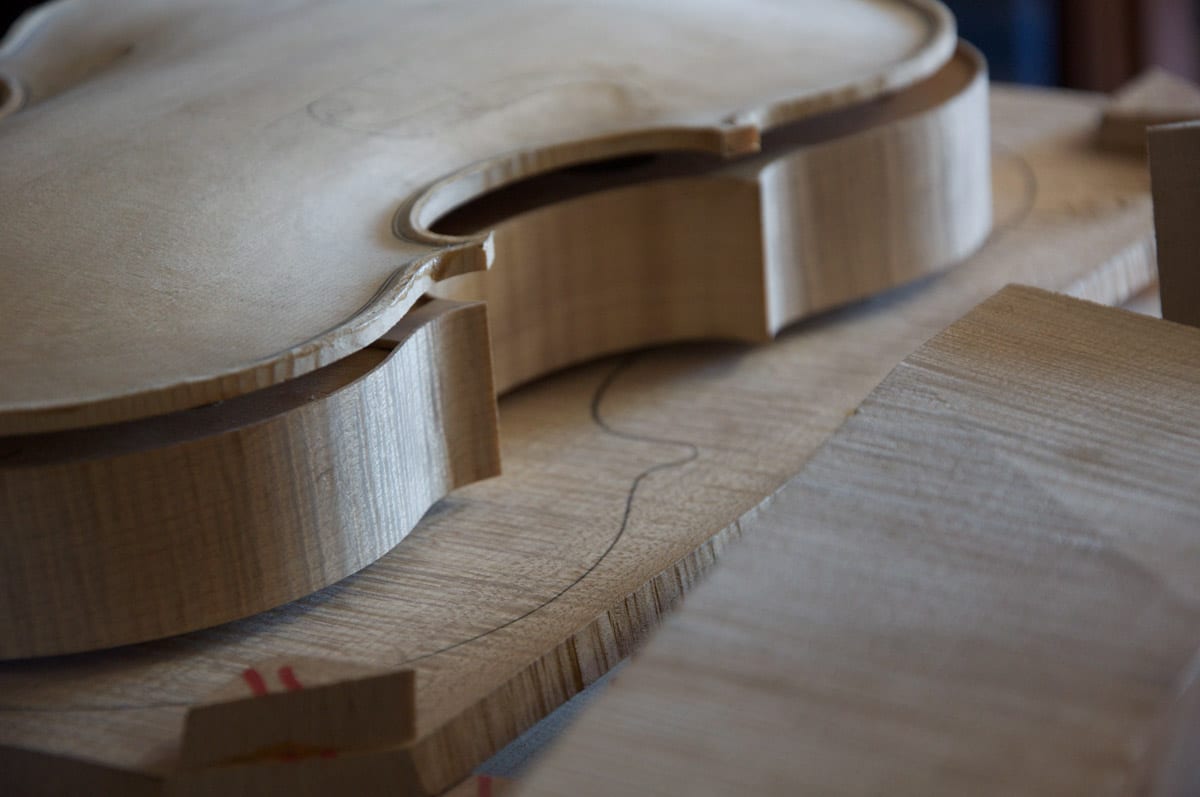
L’anatomie du violon
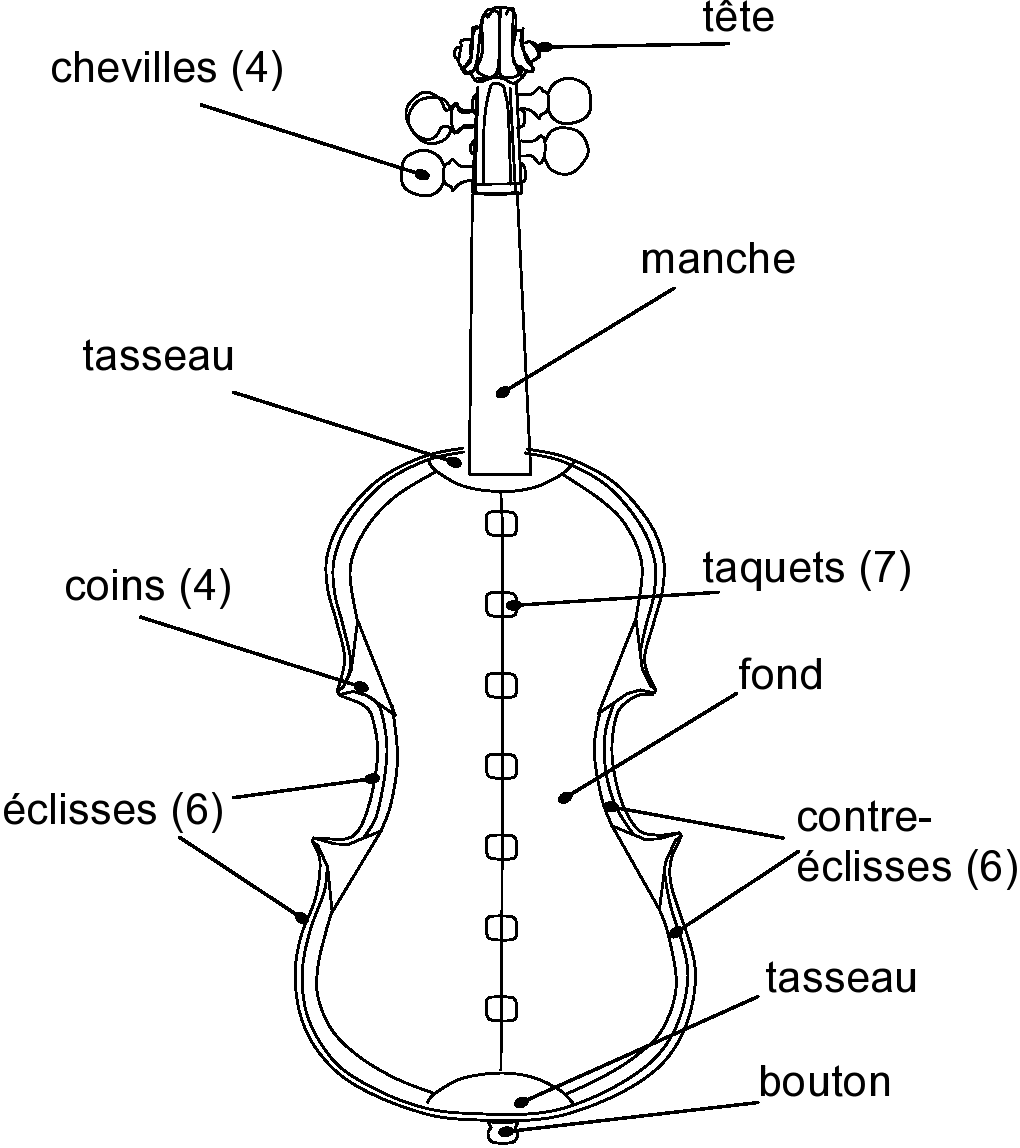
Les composants du violon forment un véritable puzzle d’environ 80 pièces. Beaucoup de ces différentes parties assemblées les unes aux autres grâce à une colle spéciale utilisée en lutherie : la colle animale. D’autres ne sont cependant pas collées et maintenues en place grâce à la tension des cordes ou à la friction. Réunies, elles forment pourtant un ensemble cohérent et sans jeu. Voici les deux principaux composants du violon :
- Caisse de résonnance (table, fond et couronne d’éclisses)
- Manche (volute, chevillier, sillet et touche)
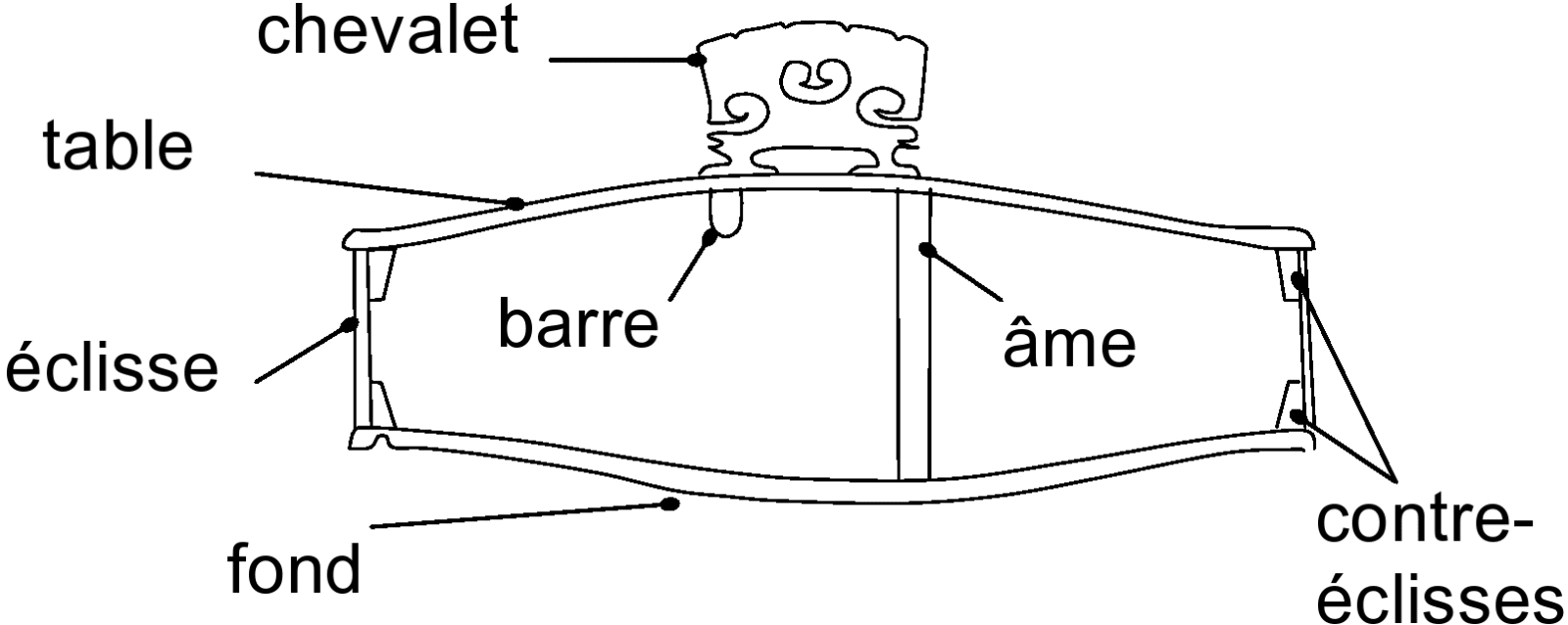
La caisse de résonance est formé par un fond et une table d’harmonie reliés entre eux par la couronne d’éclisses. Celles-ci possèdent des voûtes entièrement sculptées à la main pour accroître leur résistance. Les épaisseurs de ces voûtes sont travaillées de manière très précises pour en garantir une vibration et solidité maximale.
Le manche est quant à lui surplombé par la volute et recouvert par la touche. C’est l’interface entre le musicien et l’instrument, c’est ici que toute la virtuosité du musicien va pouvoir s’exprimer en donnant naissances aux sonorité du violon.
Schéma des composants d’un violon
Les bois de lutherie pour violon
Les bois utilisés pour réaliser les violons sont pratiquement toujours les mêmes. De plus, ils sont soumis à des critères rigoureux de sélection selon les préceptes de la tradition.
- l’épicéa, que l’ont trouve dans les Alpes, pour la table, la barre, l’âme, les contre-éclisses, les tasseaux et les coins.
- l’érable, coupé « sur sens », pour le fond, les éclisses et le manche.
- l’ébène pour la touche, le cordier et le sillet, les chevilles et le bouton (le palissandre ou le buis sont parfois utilisées pour ces pièces).
- Le saule remplace dans certains cas l’épicéa pour les blocs et les contre-éclisses.
- Toutes sortes d’essences sont utilisées pour réaliser les filets, celles-ci sont parfois teintées.
- Des essences de fruitiers sont aussi utilisées pour la réalisations de volutes car plus faciles à sculpter.
[blog_posts items= »1″ orderby= »date » ids= »2553″]
Jouer le violon
La posture du violoniste
Le violon dans la tradition occidentale se joue indifféremment assis ou debout. Les solistes (qui peuvent jouer seul, ou accompagné d’un piano ou orchestre) sont le plus souvent debout. Bien qu’il y ait certaines exceptions, comme par exemple le célèbre violoniste Itzhak Perlman. Celui-ci ayant en effet contracté la polio en étant enfant. Dans le cas des orchestres, les musiciens sont généralement assis. Ces dernières années, certains orchestres baroque ont pourtant décidé de laisser l’ensemble des violons et altos jouer debout, c’est le cas par exemple du Freiburger Barockorchester.
[pullquote align= »right »]
Dans la musique indienne, le violon est tenu entre le menton et le pied.
[/pullquote]
La position la plus acceptée pour jouer le violon est de le tenir avec le partie gauche de la mâchoire reposant sur la mentonnière. L’épaule gauche supporte elle aussi l’instrument à l’aide d’un coussin qui peut prendre différentes formes. Ces deux éléments doivent permettre de maintenir le violon assez fermement en place pour pouvoir accéder librement à toutes les notes de la touche.
Conserver une bonne posture est vitale pour pouvoir obtenir le meilleur timbre possible mais aussi pour éviter les blessures. C’est pour cela que les professeurs sont très vigilant à l’enseignement d’une posture confortable, sans tension ni rigidité. La réponse n’est cependant pas universelle en raison de la grande diversité des morphologie. Si vous êtes naturellement sensible aux problèmes de tendons et de muscles, n’hésitez pas en parler directement à votre professeur ou à un médecin spécialisé dans les pathologies liées au jeu du violon.
La main gauche et la hauteur des notes
[blockquote align= »right »]
Les violons sont accordés en quintes justes, comme les autres instruments du quatuor, l’alto et le violoncelle.
[/blockquote]
La main gauche va venir changer la longueur vibrante de la corde, produisant une hauteur de note différente de la corde à vide. Pour y parvenir, un doigt vient presser la corde contre la touche du violon. Contrairement à la guitare, il n’y aura pas de fret pour aider le musicien à trouver la bonne intonation. Cette caractéristique permet au violoniste, une fois son instrument maîtrisé de disposer d’une expressivité très libre. Une bonne pratique de l’oreille et des gammes et arpèges permettront à l’étudiant d’être parfaitement à l’aise dans le placement de ses doigts.
Sur les partitions, les doigts peuvent être numérotés :
- 1 : l’index
- 2 : le majeur
- 3 : l’annulaire
- 4 : l’auriculaire
Le 0 n’indique quant à lui pas le pouce, mais une corde à vide. C’est à dire une corde jouée sans que la main gauche n’interagisse avec elle.
Les débutants s’aident parfois de morceaux de papiers collés ou de marques pour déterminer le placement de leurs doigts. Cela peut permettre de s’aider dans un premier temps mais ne remplace absolument pas la pratique de l’oreille et de la justesse.
Les positions
[blockquote align= »right »]
La position la plus basse du violon est en fait la demi-position dans laquelle l’index se trouvera sur le La bémol.
[/blockquote]
Le placement de la main gauche sur la touche se décline en différentes positions. La première position est celle avec laquelle les débutants commencent mais est aussi largement utilisées dans de nombreux styles de musique. C’est (presque) la position la plus basse que l’on peut atteindre et celle à partir de laquelle on commence à compter. Ensuite, on accède à différentes position en remontant progressivement le manche. Par exemple, la deuxième position est celle où l’index prend la place du majeur sur la touche. L’index jouera alors un Si au lieu du La de la première position.
Un changement de position doit être effectué en gardant une justesse parfaite et une continuité dans le son. C’est un élément clef de la technique instrumentale qui demande beaucoup de travail.
En théorie, la position la plus haute atteignable sur le violon est la 13ième position.
Les positions très hautes sont particulièrement difficiles à atteindre et cela pour deux raisons :
- La distance entre chaque note est minuscule, ce qui les rend complexe à localiser ou même à distinguer.
- Une longueur de corde vibrante courte ne permet pas à tous les instruments de retranscrire des notes aiguës.
Les cordes à vide
Si la corde est jouée dans qu’aucun doigt ne la touche, il s’agit d’une corde à vide. Elle produit tout un son différent qu’une corde pressée car la vibration est plus libre. D’un autre côté, il est impossible d’y éxécuter le moindre vibrato. Même s’il existe tout de même des techniques pour le simuler. Dans la tradition classique, les cordes à vide sont souvent évitées par un changement de position afin de conserver un timbre constant. C’est souvent le cas de la chanterelle à vide (la corde de Mi) qui peut produire un son très strident, comparable à un sifflement.
Dans la musique traditionnelle, les cordes à vide sont très largement utilisées. Elles sont même parfois utilisées en additions avec des cordes pressées pour produire une basse continue (bourdon) que l’on retrouve par exemple sur les cornemuses ou vièles à roue.
Doubles cordes et accords
La technique de double corde consiste à jouer deux cordes simultanément en produisant une harmonie. Néanmoins, l’intervalle le plus grand accessible à un violoniste sur deux cordes voisines est l’octave.
Il arrive parfois que le musicien doive jouer un accord de trois ou quatre notes avec son violon. Comme il est impossible de les jouer simultanément, il sera alors obligé de les interpréter séparément. Dans les orchestres il est cependant possible de faire jouer les accords complètes en faisant jouer une partie de l’accord complet à différentes sections de violons.
Vibrato
[pullquote align= »right »]
Contrairement à ce que l’on pourrait croire. Il est parfaitement impossible de camoufler une fausse note à l’aide d’un vibrato, même ample.
[/pullquote]
Le vibrato est une technique de la main gauche qui permet de faire varier subtilement la hauteur d’une note. Une grande variété de vibratos sont possibles en utilisant le poignet ou le coude pour générer le mouvement. Pourtant, bien que les mouvements mettent en oeuvre différentes parties du bras et de la main. Il ne s’agit seulement que de l’extrémité du doigt qui va altérer légèrement la longueur vibrante de la corde.
Le vibrato n’est pas précisé sur les partitions et peut se placer presque n’importe où. De ce fait, le quand, le comment et le pourquoi du vibrato sont laissés aux choix et au goûts artistiques de l’interprète. C’est un élément très personnel et réflexe qui fait parti de la mode actuelle de la musique classique. C’est pour cela qu’il est parfois un obstacle dans la musique baroque ou traditionnel où il n’est pas sensé être utilisé.